Office & Conference Room Sweeps
Corporate eavesdropping is rarely a spy in a trench coat. It is a supplier who knows your ceiling price, a competitor whose bid lands four hundred dollars under yours, a strategy that leaks the week after it was discussed. By the time the pattern is obvious, the damage is in the accounts.
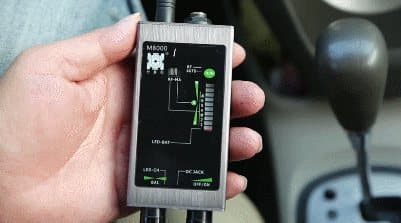
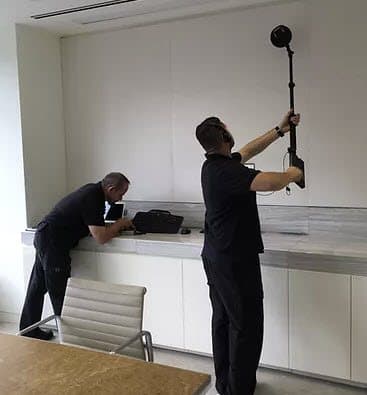
A counter-surveillance technician working a commercial space has to understand the equipment used against it: room transmitters, hook-switch bypasses on desk phones, taps on data lines, recorders left in ceiling voids, and conferencing hardware that was never configured to stop listening. We examine all of it — the radio spectrum, the wiring, the furniture and the fabric of the room.
We work outside business hours by default. Staff arrive to a room that looks exactly as they left it.
What we search for
- Room transmitters, including burst and voice-activated types
- Hook-switch bypass and series/parallel taps on telephone instruments
- Taps and implants on data, network and intercom cabling
- Carrier-current devices using the building's own AC wiring
- Covert cameras in smoke detectors, clocks, signage and AV equipment
- Dormant recorders with no emissions at all to detect
- Conferencing and VoIP hardware left in an always-on state
WHAT YOU RECEIVE
A written technical report: areas covered, instruments used, frequencies examined, anything recovered, and photographs.
TYPICAL DURATION
Typically 4–8 hours for a single floor; larger sites scoped in advance.